Washing curtains without ruining the drape
How to wash panels at home, why damp hanging beats ironing, and what damp air does to fabric in a bathroom.

Why curtains need washing more often than people think
Most of us treat curtains like furniture. We hang them, we leave them, and we forget they are there until we notice the color has shifted or the fabric feels stiff. That stiffness is not the material aging. It is dust, cooking oils, and airborne particles settling into the weave over time. The same things that collect on a windowsill collect on the panel that hangs in front of it.
We make fabrics meant to last through years of use, and every one of our panels can go into a washing machine because we know this buildup happens. It happens faster than you might expect. A kitchen window picks up grease from the stove within weeks. A bathroom curtain holds moisture from daily showers, and that moisture traps particles against the fibers. Even in a living room, the fabric acts like a filter for everything floating in the air.
The problem is not just cleanliness. When dust and oils weigh down the fibers, the drape changes. A panel that once fell in soft, even folds starts to hang differently along the bottom edge. You might think the fabric has worn out or lost its shape, but it has not. It is simply carrying weight it was never designed to hold. Washing restores the hand and lets the fabric fall the way it did when you first hung it.
We test our materials by leaving them on windows for weeks before we add them to our catalog. We watch how morning light hits them, how the bottom edge holds up after repeated washing, and how the drape behaves when the fabric is clean versus when it has been hanging for months. What we have learned is that most people wait too long between washes. Twice a year works well for bedrooms and living rooms. Kitchens and bathrooms benefit from a run through the machine every few months.
This guide will walk you through how to do it without damaging the fabric or ruining the way your curtains hang.

Reading the care label before the first wash
The tag sewn into the hem of your new panels tells you everything we know about washing them. We put it there because the fabric itself cannot tell you, and guessing is what ruins curtains. Before you run water for the first time, find that label and read what it says.
Most of our products are machine washable. That covers more than five hundred of the panels we make. But machine washable does not mean you can treat them all the same way. A polyester microfibre panel handles warm water and a regular spin cycle without much trouble. Our velvet and chenille curtains need cold water and a gentle setting, or the pile flattens in ways that ironing will not fix. Linen blends shrink if you use hot water, even though they are sturdy enough for a washer. The care label on your specific set spells out the temperature, the cycle, and whether you should use a mesh bag.
We also print whether you can tumble dry the fabric or if you need to let it hang dry instead. Some of our materials come out of the dryer looking fine on low heat. Others, especially the lighter sheers and the embroidered patterns, hold their shape better when air dries while laying flat. If the label says dry clean only, we mean it. Those fabrics have finishes or weaves that water will change.
Check for ironing instructions too. Many of our curtains look best when you iron them on the reverse side while the fabric is still slightly damp. A few should not touch an iron at all, and the label will tell you to use steam from a distance or just smooth them by hand after washing. This takes maybe thirty seconds before you start, and it saves you from learning the hard way that your new drapes do not agree with your washer's default settings.

Water temperature, spin and what shrinks fabric
Hot water is what shrinks most curtains. We see it happen when people wash their panels at the same temperature they use for towels or bedding, and the fabric comes out shorter and stiffer than it went in. The heat relaxes the fibers, then the spin cycle locks them into a tighter configuration as they dry. Once that happens, you cannot stretch a panel back to its original length.
We recommend washing all of our curtains in cold water. This applies across every fabric we make, from our velvet and chenille pieces down to our polyester microfiber and faux linen blends. Cold water lifts dirt without putting the fibers through thermal stress. It also protects any thermal or noise-reducing layers we have woven into the fabric, since those can break down or separate at higher temperatures.
Set your machine to a gentle or delicate cycle. A standard cycle tumbles too aggressively for curtain fabric, especially our sheers and embroidered panels where the stitching needs to stay intact. The spin speed matters more than most people realize: we suggest using the lowest setting your washer offers. High spin forces water out of the fabric by centrifugal force, and that force pulls fibers inward. Our triple-woven blackout curtains are dense enough to handle moderate spin, but even they will last longer if you keep it slow.
Drying method counts here too. If you must use a dryer, choose low heat and take the panels out while they are still slightly damp. Hang them immediately from the rod or a hanger so gravity helps them settle back into shape. Air drying is gentler still. We hang new fabrics on our own windows for weeks before we add them to the catalog, partly so we can watch how they behave through washing and drying cycles.
The short version: cold water, gentle cycle, low spin, low heat or air dry. Your curtains will keep their size and drape longer this way.
Wash sheets and blankets weekly in hot waterU.S. Environmental Protection Agency, Care for Your Air: A Guide to Indoor Air Quality, read 22 August 2026
Hanging damp instead of ironing
If you can skip the ironing board, we think you should. Most of our curtains hang better if you put them back on the rod while they are still a little damp, and it saves you the work of pressing every panel.
Here is how we do it in our own windows. Take the panels out of the machine when the cycle ends. Give each one a sharp snap to shake out the worst of the folds. You do not need to be gentle here. The fabric can take it. Then hang them on your rod right away. Use the hooks or rings you already have. Get the header straight and let the fabric fall where it wants to.
The weight of the damp cloth does most of the work for you. Gravity pulls the wrinkles down as the panel dries, and the fabric settles into soft folds instead of crisp creases. This works especially well with our triple-woven blackout curtains because that weave is heavy enough to hold its shape while it dries. Lighter sheers will dry faster, so smooth them by hand once they are up and then leave them alone.
You might see a few puckers near the heading or along the sides when the fabric is still wet. That is normal. They usually disappear on their own within a day or two. If one spot bothers you after the panel has dried completely, you can touch it up with an iron on a low setting. But most people find they never need to.
A couple of things to keep in mind. Do not overload your washer, because crowded panels come out more wrinkled and take longer to dry on the rod. And avoid direct sunlight while the fabric is drying if you can. It will not hurt the curtain, but uneven drying can sometimes leave marks until the whole panel settles.
This method takes a little patience. You have to wait for the panels to dry completely before you arrange the final folds. But once they do, they hang cleanly without that pressed look that ironing can leave. We have watched hundreds of our own panels dry this way over the years, and it is still the approach we recommend first.
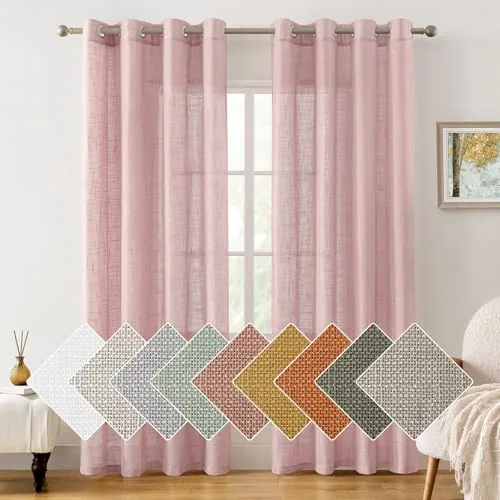
Sheers, embroidery and the delicate end of the range
Sheers, embroidery, and the delicate end of the range ask for a different kind of care than the heavier panels we make. We have 95 sheer and privacy curtains in our catalogue right now, plus 52 with embroidered or patterned designs. These fabrics are lighter by design, so they move differently in water and they dry differently too.
The embroidered pieces deserve particular attention here. Those leaf patterns and stitched details are part of the weave itself. We do not glue them on afterward or apply them as a coating. That means the thread work holds up well through normal washing, but it can catch if you are not careful about what you wash alongside it. Close any zippers on other items in the same load. Skip anything with hooks, buckles, or rough seams that might snag the stitching as the drum turns.
For sheers, the main thing to remember is that these panels filter light because the fabric is open. Agitate them too hard and you risk stretching the weave in ways that do not bounce back. We recommend a gentle cycle with cold water for all 132 products across these two departments. A mesh laundry bag helps if you want extra protection, especially for the longer drops.
Drying is where most of the damage happens to delicate curtains. High heat can shrink polyester blends and weaken cotton fibers over time, so we suggest the lowest setting your machine offers or, better yet, hang them while they are still damp. The weight of the water actually works in your favor here. It pulls the fabric straight as it dries, which means less ironing later and fewer odd creases set into the material.
Our linen blend and plain curtain lines sit at this same end of the care spectrum. Only eight products use those constructions, but they follow the same rule: treat them like the fine textiles they are, not like heavy blackout panels that can handle a standard wash without a second thought.
Blackout linings and what heat does to them
Our blackout curtains use a triple-woven construction. We weave the light-blocking layer into the fabric itself, so there is no coating on the back to peel or crack. This matters when heat enters the picture. A coated lining can separate from its base fabric after enough trips through a hot dryer. The adhesive softens, the layers pull apart, and you end up with a panel that lets light through in patches. Triple-woven cloth does not have that failure mode because it is one piece of material from the start.
Heat still affects it, just differently. Polyester fibers relax when they get hot and stay hot for too long. The weave loosens a fraction. You might not see it right away, but the drape changes over repeated cycles. The panel falls a little less evenly. It does not ruin the curtain, but it does move it away from how it looked when you first hung it.
We recommend washing in cold water and tumble drying on low. If you can line dry, that is even better for the shape of the fabric. Avoid high heat settings entirely. They shorten the life of any blackout material faster than anything else you do to it in the laundry room. Ironing is fine if you need it, but keep the iron on a synthetic or low setting and press from the back. Direct high heat on the face of the fabric can flatten the texture of the weave in ways that do not recover.
Some of our customers ask about dry cleaning. It works, and it avoids the heat problem altogether, but it costs more per wash and we find most people do not bother after the first or second time. Machine washing on gentle cycle with cold water gets the job done for everyday use without the extra expense. The goal here is simple: keep the temperature down, keep the agitation reasonable, and your panels will hold their darkness and their drape for years.
Bathrooms, damp and mould on fabric
Bathrooms are the hardest room in the house for any textile. You have moisture in the air every day, often warm air that holds more of it, and fabric that never fully dries out between uses. We make shower curtains and bath rugs for exactly these conditions, but we also know that plenty of people hang regular curtains in bathrooms, or put a sheer panel across a window that sits right above the tub. That is where mould shows up if you are not careful.
Mould needs three things to start growing on a curtain: a food source, which for synthetic fabrics means the oils and soap residue that land on the surface. Moisture that stays on or inside the weave long enough. And warmth. A bathroom supplies all three without any help. The real problem is not a single steamy shower. It is the slow accumulation of dampness over weeks because the fabric never gets a chance to dry completely.
We weave our blackout curtains with three layers so we do not need to coat the back, and one benefit of that construction is there is no separate liner layer where moisture can get trapped between materials. But even a well-made panel will struggle if it stays pressed against a cold wall while humid air circulates around it. The condensation forms on the coolest surface nearby, which is often the outer face of the curtain itself.
If you already have a curtain up in a bathroom and you are worried, pull it back after everyone has showered and let the room ventilate. Open a window if you have one, or run the fan longer than you think you need to. Wash the panel monthly if you can. Most of what we make goes into the machine on a gentle cycle with mild detergent, and you should skip the fabric softener because it leaves a film that mould likes to feed on. Tumble dry on low or hang it somewhere with good airflow, not back on the rod while it is still damp.
For new purchases, look at polyester or microfibre rather than natural fibres if the window will live near water. Cotton and linen absorb more moisture and take longer to release it. Our shower curtains use materials chosen for this reason, and they are sized to work with standard liners if you want that extra barrier between spray and fabric. A little attention to how the panel dries matters more than almost anything else about the material itself.
A home may have mold growing on a shower curtainU.S. Environmental Protection Agency, Care for Your Air: A Guide to Indoor Air Quality, read 22 August 2026
Dust, allergens and the rest of the room
Your curtains sit in a room. That means they share the air with everything else in it: dust from the floor, pet dander that lifts when your dog shakes, pollen tracked in on shoes, cooking oils that drift toward the nearest soft surface. We weave our panels to hold up to regular washing, and most of them go straight into the machine without any special handling. But washing the curtains only solves part of the problem if the rest of the room keeps feeding them more of the same thing.
Start with the obvious spots. Baseboards collect dust in a layer you can sometimes see if the light hits right. Run a cloth along them before you wash anything. Do the same for the top of your door frames and the window sill itself. These are low places, and gravity pulls particulates down into them all day long. If you skip this step, the first breeze through the room will lift that dust back into the air, and your clean curtains will catch it within hours.
Look at what stands near the window. A couch or armchair sheds fibers constantly. So does a rug, even a short one. Vacuum these surfaces on the same day you plan to wash the panels, ideally before you take them down. The goal is not to make the room sterile. It is simply to cut down the volume of loose material floating around while the curtains are out of the window.
Kitchen curtains have their own version of this problem. Grease travels through the air when you cook, and it settles on whatever fabric is closest to the stove. Our kitchen tiers are machine washable for exactly this reason. Wipe down the range hood and the cabinet faces near it while the panels are in the wash. If you do not, they will pick up fresh residue as soon as they go back up.
Bathrooms work differently but follow the same logic. Shower curtains deal with humidity and the minerals left behind when water evaporates. Clean the tub or shower basin at the same time you wash the curtain. Scrub the grout if it needs it. A damp curtain hung back into a still-damp, still-soapy environment will not stay clean for long no matter how well you washed it.
We design all of our textiles to be practical. They are meant to live in real homes with windows that face streets, pets that sleep on furniture, and kitchens where people actually cook. Wash them when they need it. Just give the room around them the same attention for a few minutes, and they will stay fresher between washes.
Checkout and fulfillment are handled by our retail partner.
Keep indoor humidity between 30 and 50 percentU.S. Environmental Protection Agency, Care for Your Air: A Guide to Indoor Air Quality, read 22 August 2026
Bath rugs, shower curtains and the weekly wash
Bath rugs and shower curtains see more water in a week than most curtains do in a year. That is just the nature of where they live. We make both, and we design them for the wash cycle because we know you are not going to hand-wash a bath mat.
Our bath rugs run from thirteen and a half dollars up to about sixty. Most of them sit around twenty-five. They use microfibre or cotton, depending on the style you choose. The cotton ones shrink a little the first time you wash them. We build extra size into the cut to account for this, so they still cover the floor after they come out of the dryer. Wash them on warm and tumble dry on low. If you hang them over the side of the tub to drip, they take a long time to dry through, and that is how mildew starts.
Shower curtains are a different question. Ours cost between fourteen and twenty-seven dollars. The fabric ones are polyester or a cotton blend, and all of them are machine washable. You can wipe a polyester one down with a damp cloth between washes if you want to. When it does go into the machine, throw in a few towels so it does not bang against the drum.
Cold water, gentle cycle. Take it out as soon as the cycle ends and hang it back up while it is damp. The weight of the water pulls the wrinkles out as it dries, which saves you from ironing something that lives in a bathroom.
We do not use vinyl or plastic liners in our own range, but if you have one from somewhere else, wash it on its own with warm water and a little baking soda. Rinse it well. These things trap soap scum, and a monthly wash keeps them usable longer than most people expect.
The weekly wash is less work than you think once you get into the rhythm. Rugs go in with towels. Curtains go in with sheets. Nothing here needs special treatment beyond what your machine already does.
increasing ventilation (running a fan or opening a window) and cleaning more frequently will usually prevent mold from recurringU.S. Environmental Protection Agency, Mold Cleanup in Your Home, read 22 August 2026
Keeping a panel for years rather than seasons
The difference between a panel that lasts five years and one you replace in eighteen months is not luck. It is how you wash it and where you hang it. We make our curtains to hold up, but we also know that a few habits will stretch their life considerably.
Start with the basics. Sun fades fabric faster than anything else, so if your window gets direct afternoon light, the panels on that side will show wear first. You can rotate them front to back every few months to even out the fading. It does not stop it, but it keeps the color looking consistent across the window.
Washing matters more than most people realize. Nearly all of our 524 machine-washable panels do fine in cold water on a gentle cycle, but heat is what breaks down fibers over time. Tumble dry on low or hang them up while they are still a little damp. The weight of the water actually helps pull out wrinkles as they dry, and you avoid the damage that high heat can cause to synthetic weaves.
For our blackout curtains especially, keep in mind that the light-blocking layer is woven into the fabric, not glued to the back. That construction holds up well through repeated washing, but aggressive cycles or hot water can still stress it. Stick to cold, gentle settings, and skip the bleach entirely. If you need to iron, use a low temperature and press from the back side.
Velvet and embroidered pieces need extra care because of how the surface sits. Wash these inside out, either alone or with fabrics that will not snag the pile or pull at the stitching. A mesh laundry bag helps here. Dry them flat or hang them by the heading rather than clipping them to a line, which can leave marks on velvet.
Store off-season curtains folded loosely in a breathable container, never in plastic. Fabric needs air circulation or mildew can develop, especially in humid months. When you take them out again, a quick steam or a tumble on low with a damp towel will remove any storage creases before you rehang them.
We want you to reach for these panels years from now and find them still doing their job. A little attention along the way makes that happen.
Increasing the amount of fresh air brought indoors helps reduce pollutants insideU.S. Environmental Protection Agency, Care for Your Air: A Guide to Indoor Air Quality, read 22 August 2026