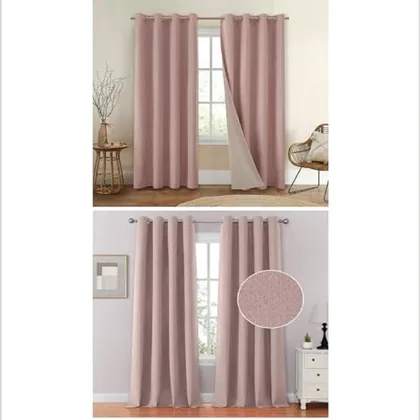
Full Blackout Curtains Faux Linen Curtains Blush Pink Room
52 x 96 in2 panelsblackout
$90.91blackout
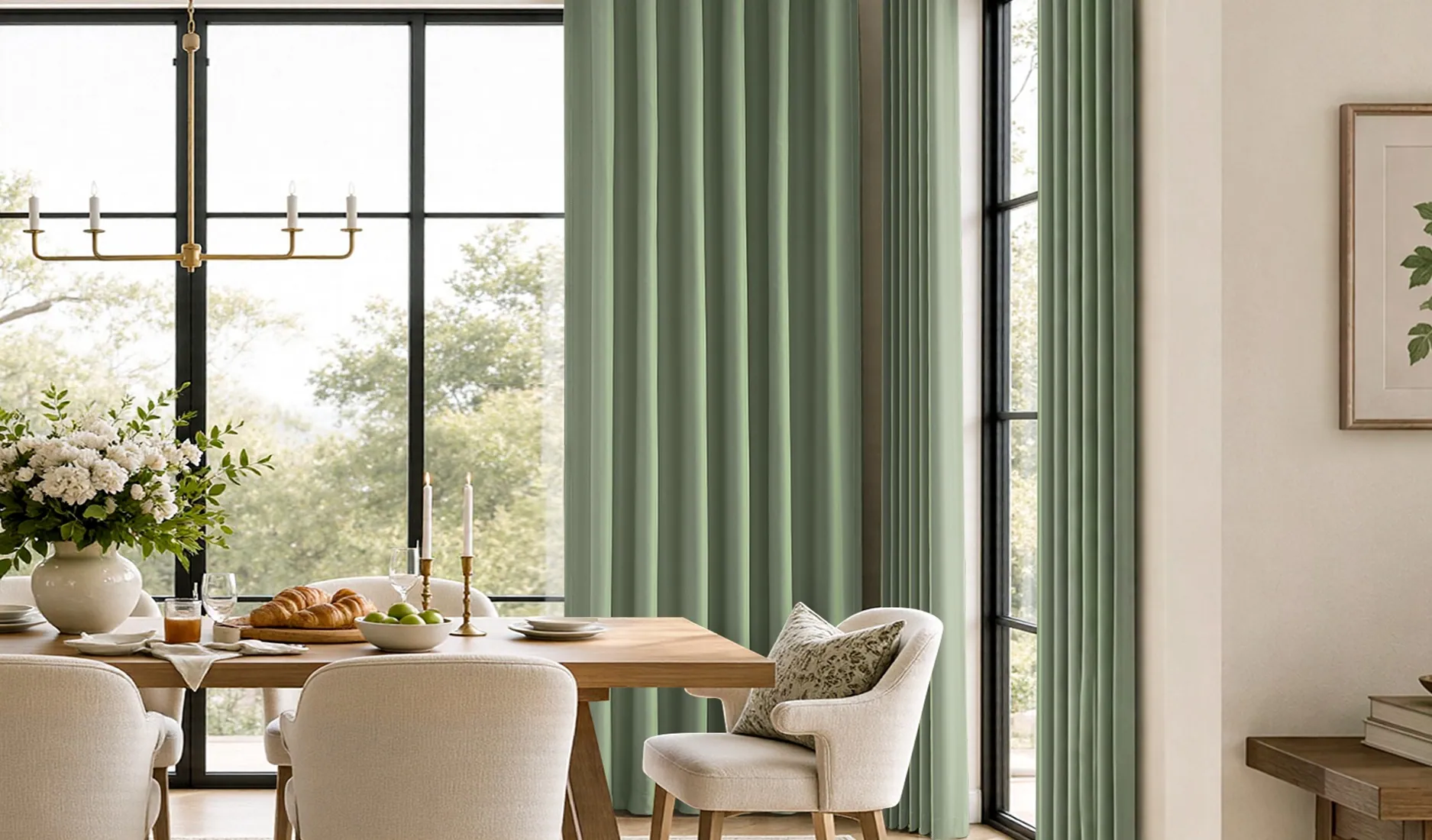
Curtains and home textiles
We make curtains and home textiles for anyone who wants their windows covered properly. Our range runs from triple-woven blackout panels that block the light to soft sheers for privacy without darkness, and it extends into bedding, bath rugs, and pillow covers. We design and weave our own fabrics, and we test how they handle morning sun, washing, and daily use before we add them to the catalogue.
Departments
We make home textiles, and we organize this catalogue by what a panel has to do rather than what it is called. You will find 562 products across 11 departments here. When you are choosing, you can sort by the job that matters to you: how much light gets through, whether it keeps warmth in or cuts down noise, and how it hangs on your rod.
Most of our panels state their finished size in inches, how many come in a pack, and which heading they use. We list the fabric for nearly every item, along with care instructions. The colors run toward sage green, beige, cream, white, grey, and blush. If you need full blackout, that section holds our largest range. For something lighter, look at sheer and privacy curtains or kitchen tiers. Bath rugs, shower curtains, pillow covers, and bedding round out the rest of what we make for the home.
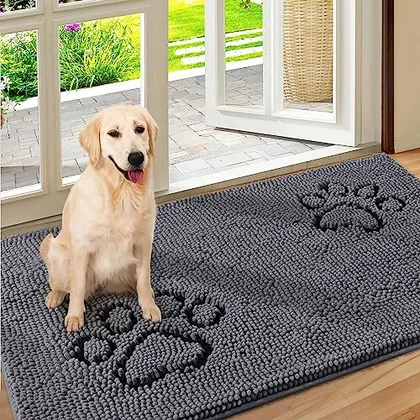 Bath Rugs & Mats64 products
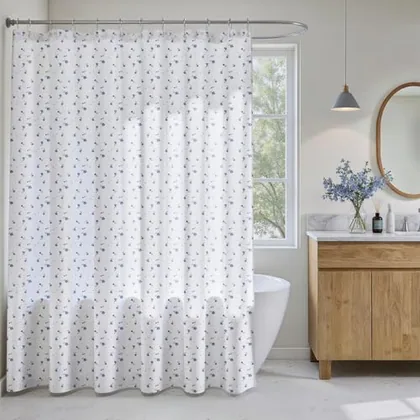 Shower Curtains27 products
 Pillow Covers36 products
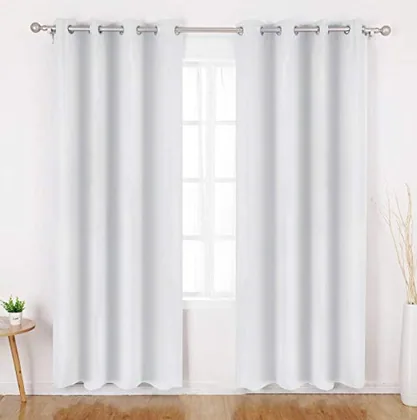 Bedding28 products
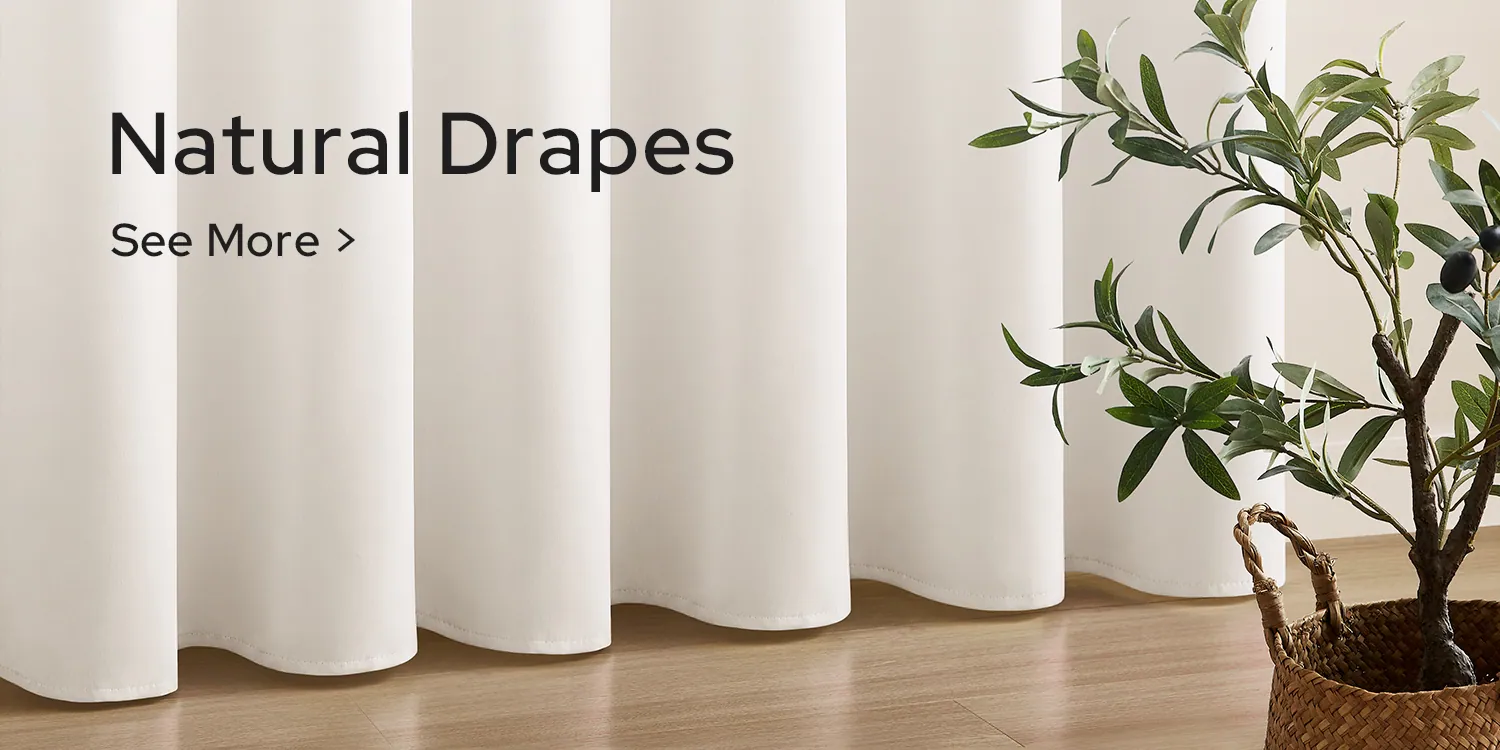 Door Curtains61 products
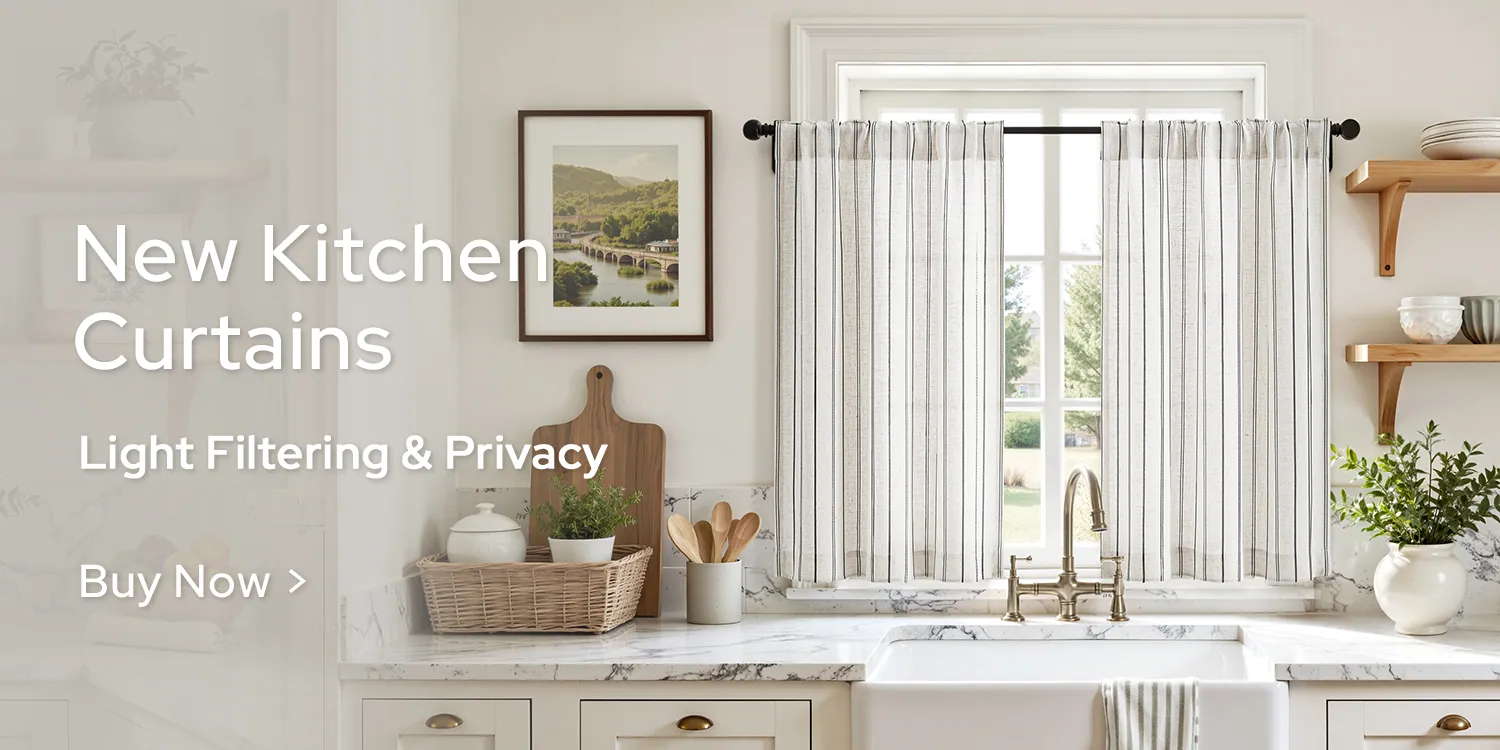 Kitchen Tiers & Valances42 products
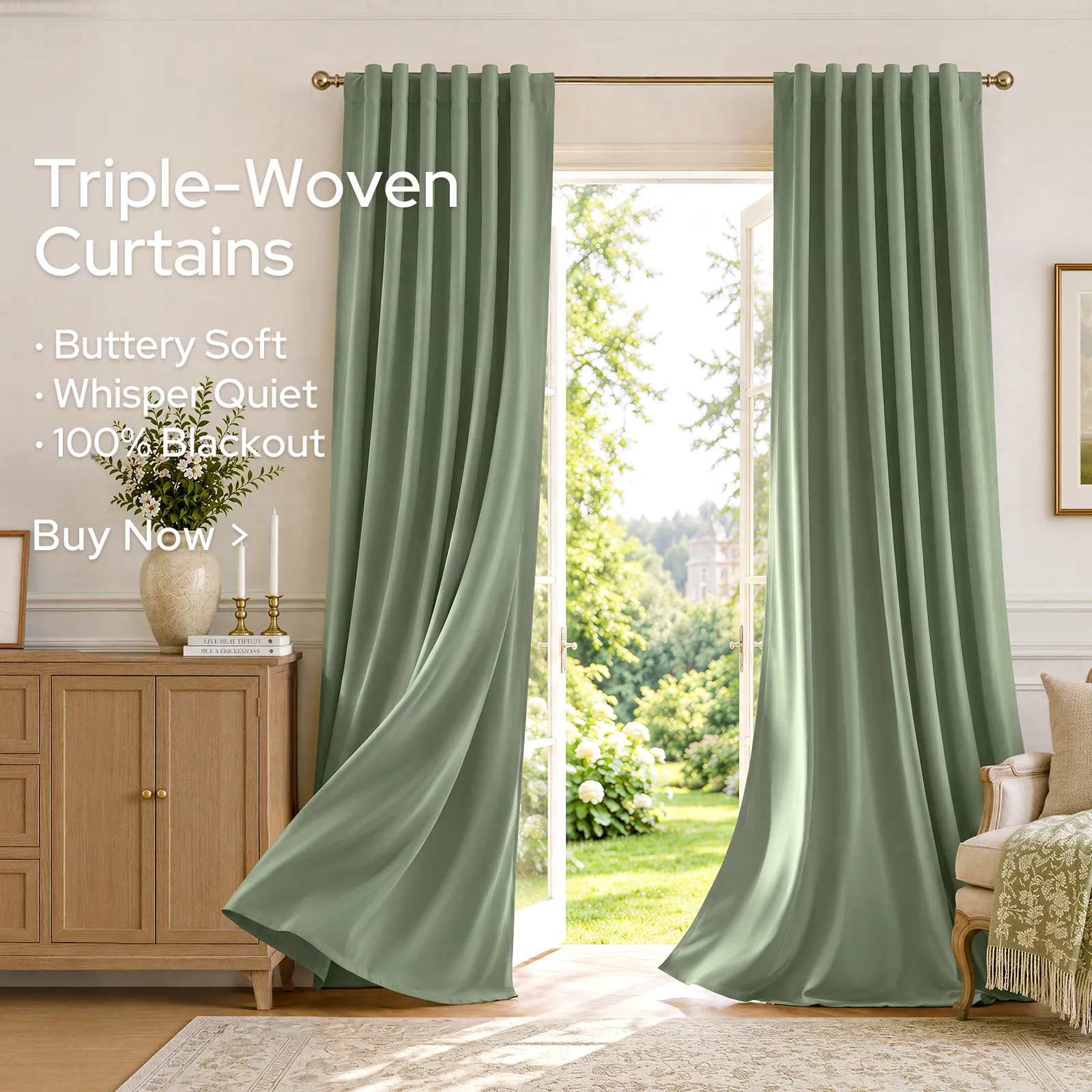 Velvet Curtains17 products
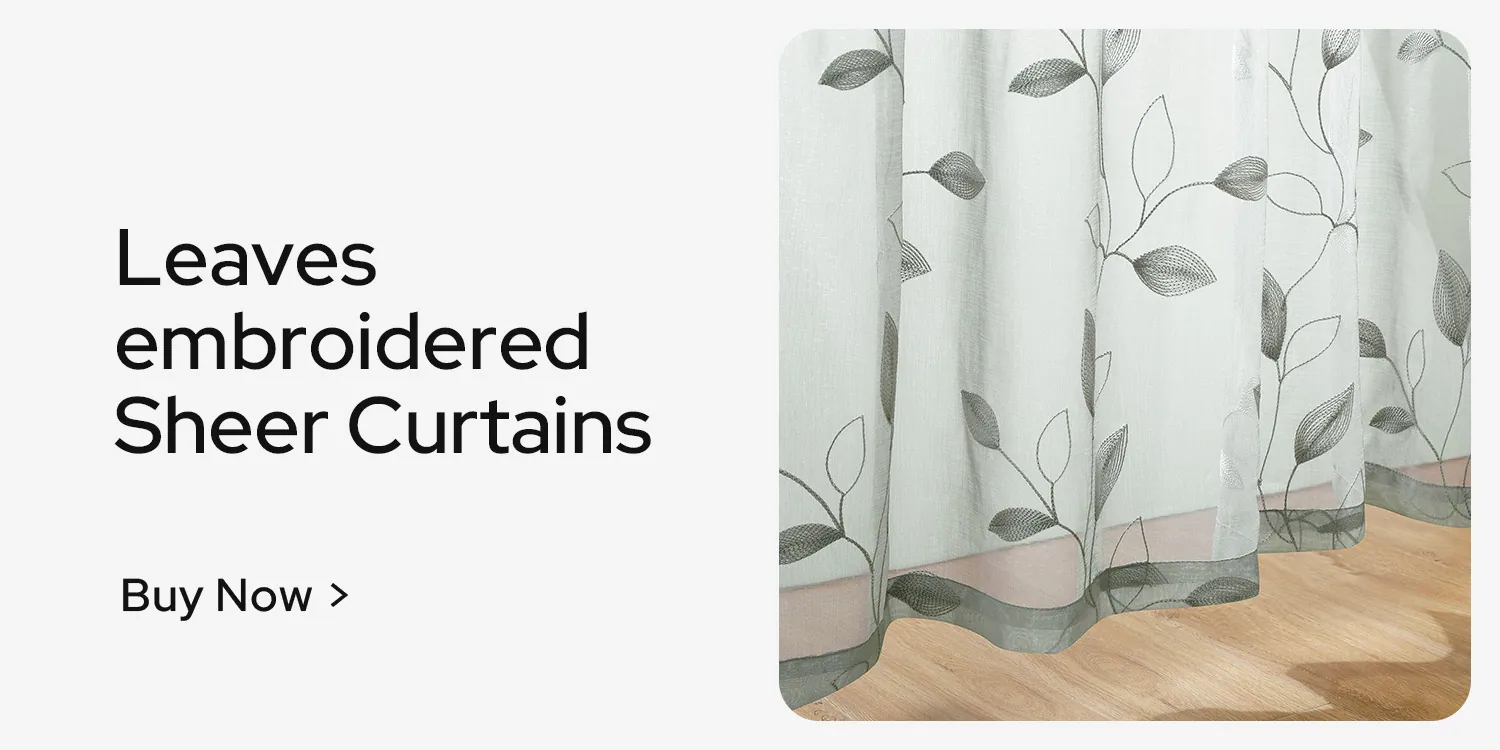 Embroidered & Patterned52 products
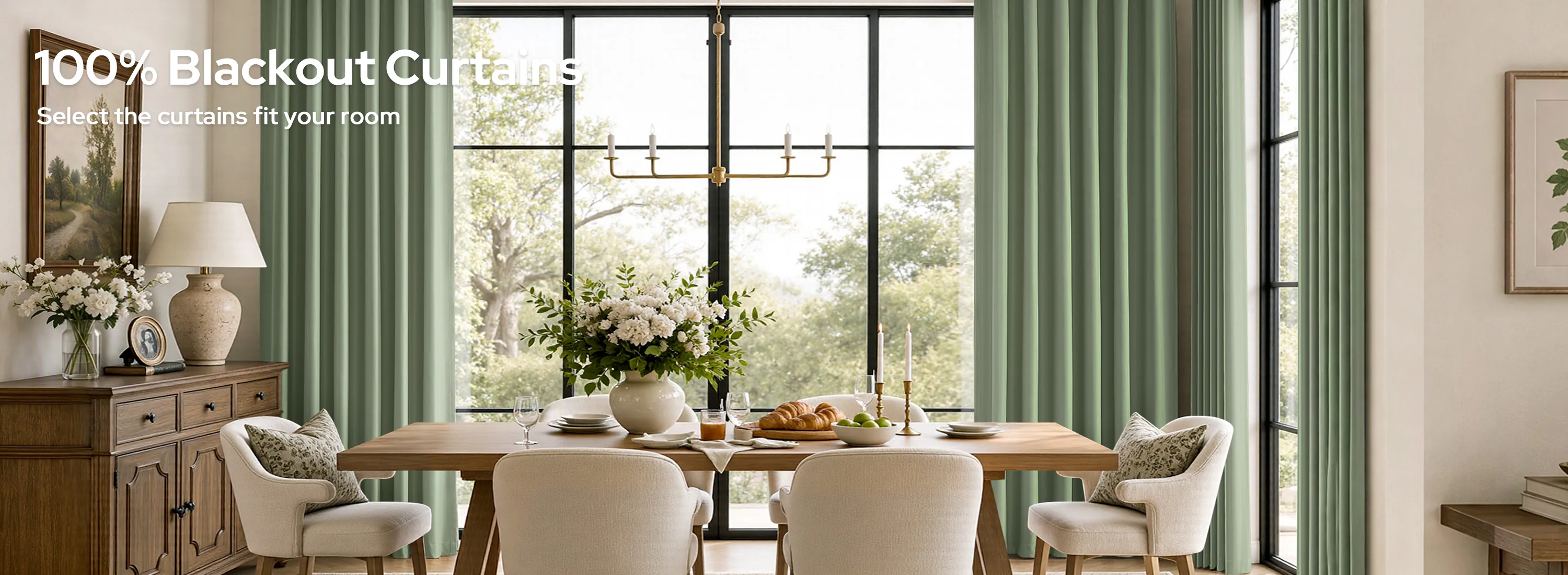 Blackout Curtains132 products
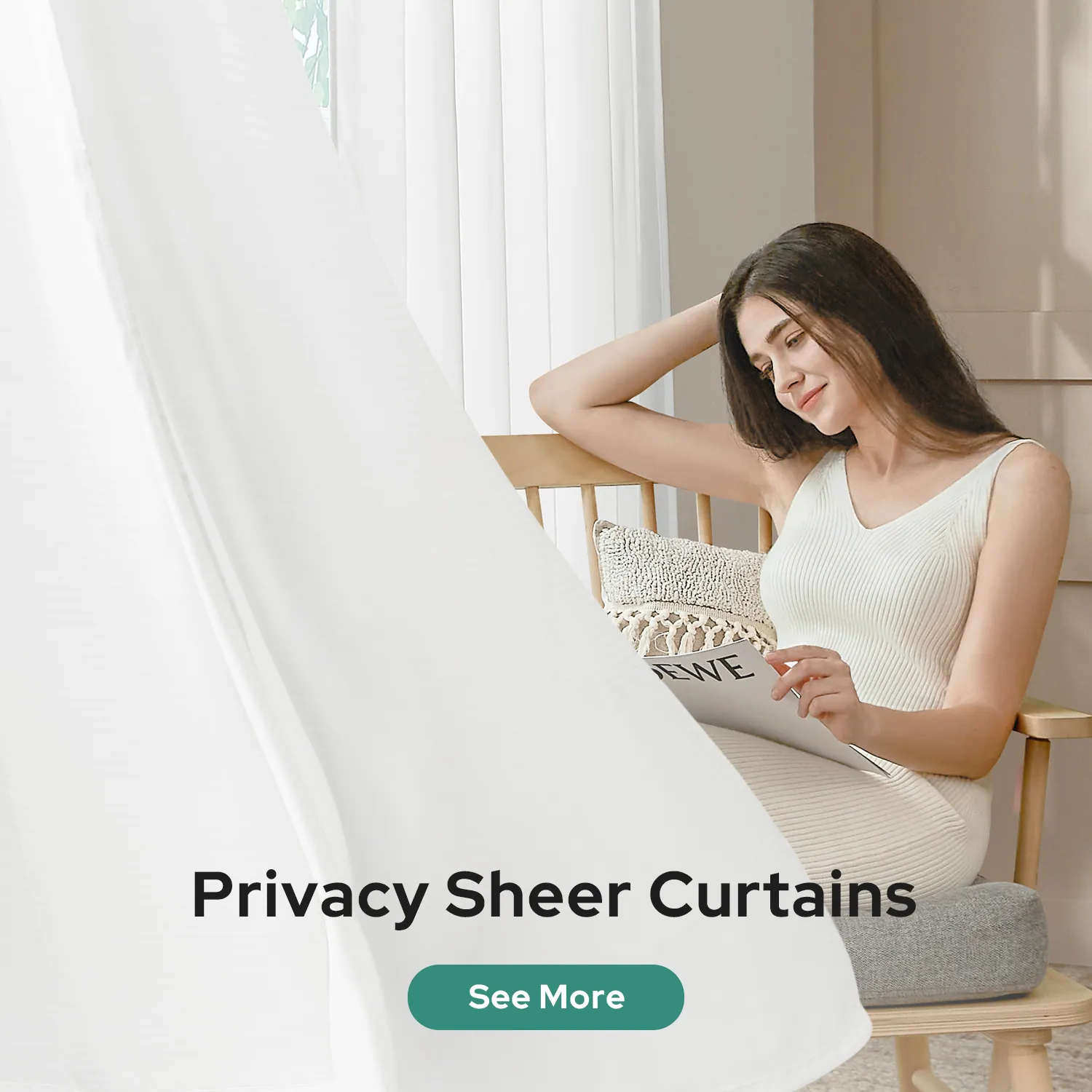 Sheer & Privacy Curtains95 products
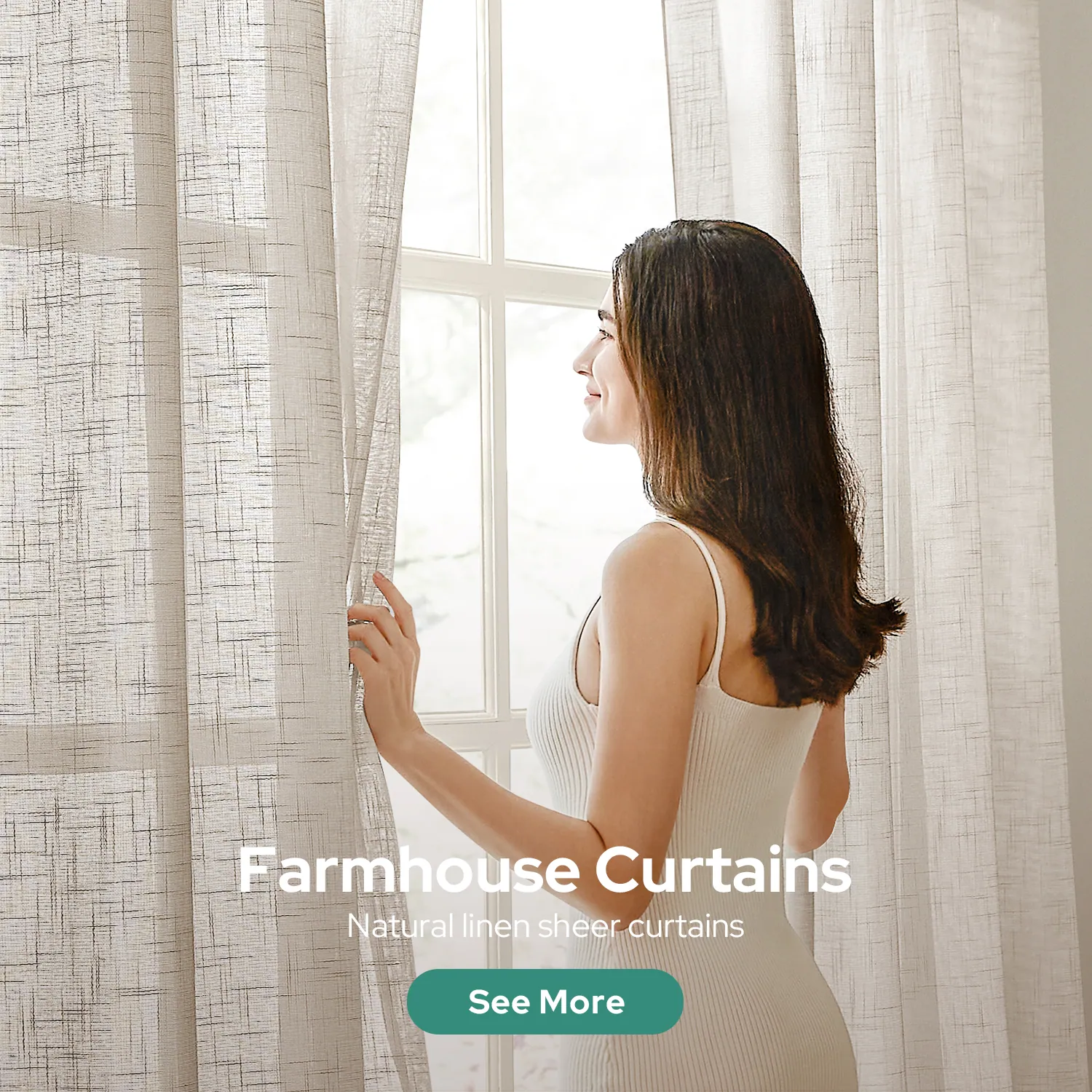 Linen & Plain Curtains8 products
The range
132 panels, from bedroom drops to nursery widths, each one stating how much light it blocks.
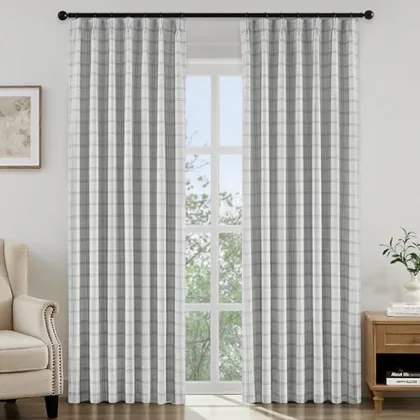
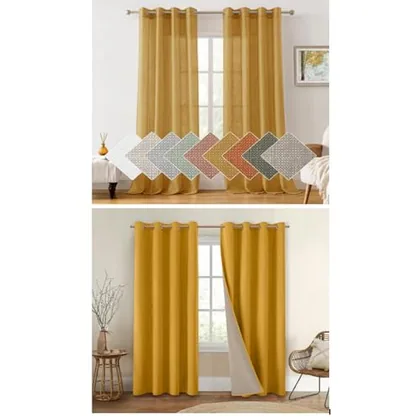
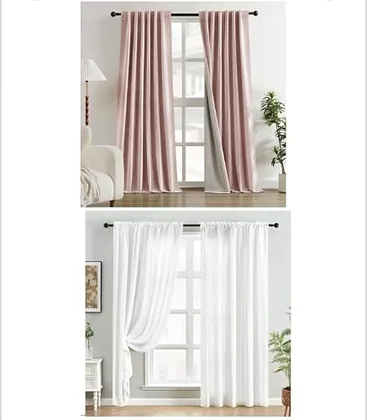
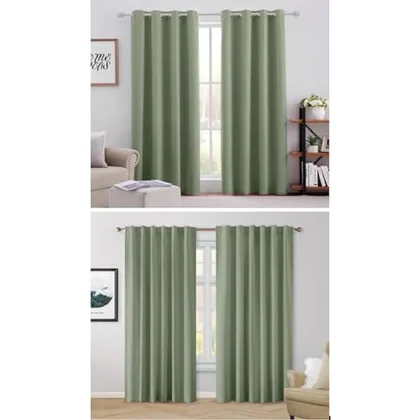
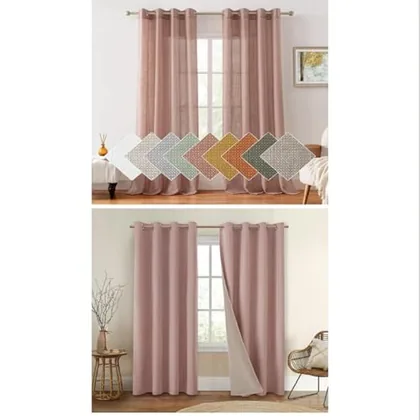
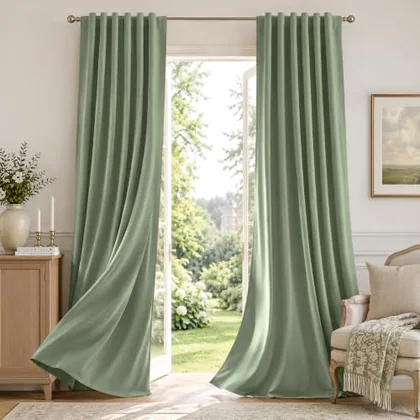
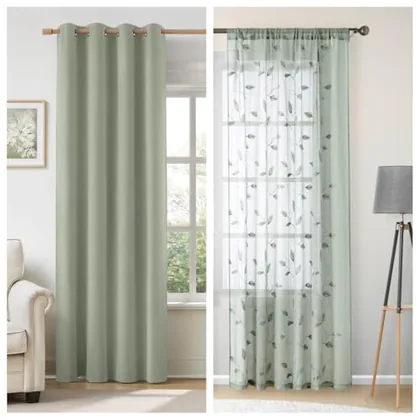
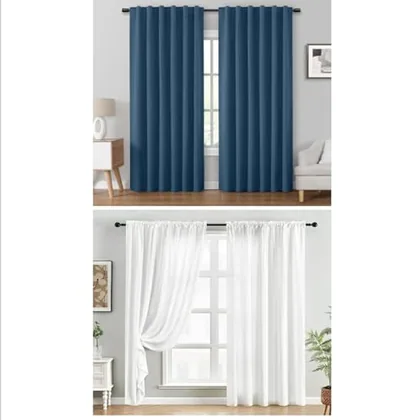
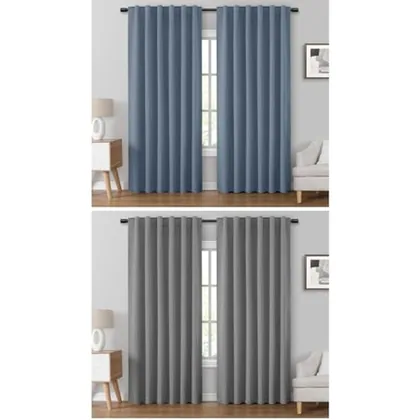
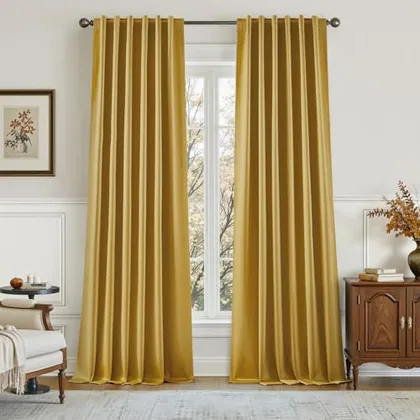
Watch
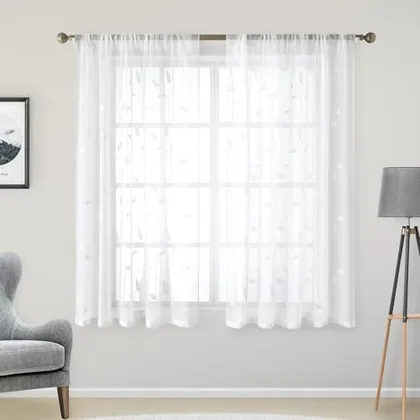
Our faux linen sheers in a room, filmed by us: how the fabric hangs, how it filters daylight, and how the grommet heading sits on the rod.
In the film above, you can see how our faux linen sheer panels hang from a rod in a real room. We wanted to show you what happens when daylight hits them. The weave lets light through in a soft, even glow rather than a flat wash of white. You will notice how the fabric gathers into natural folds and how far down each panel reaches on that window.
A photograph cannot quite capture any of this. It freezes one moment at one angle. When we watch fabric move, we see whether it drapes or stiffens, how much of the glass it actually covers, and what it looks like as the light shifts through the day. That is why we film our curtains instead of just shooting them still.
The range
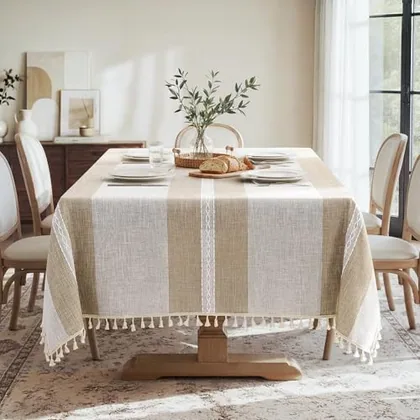
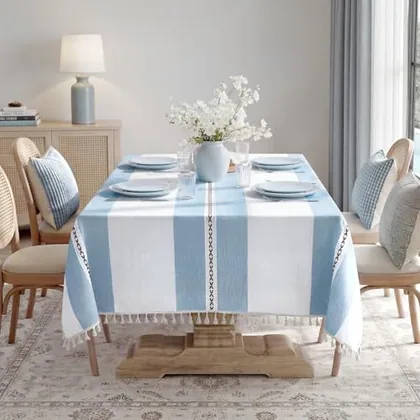
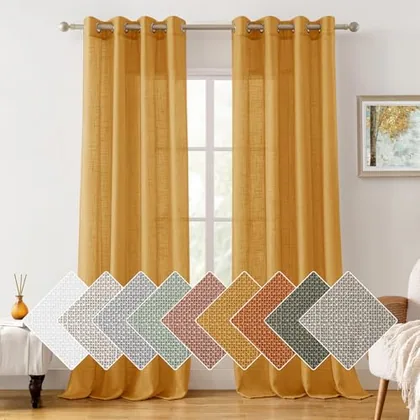
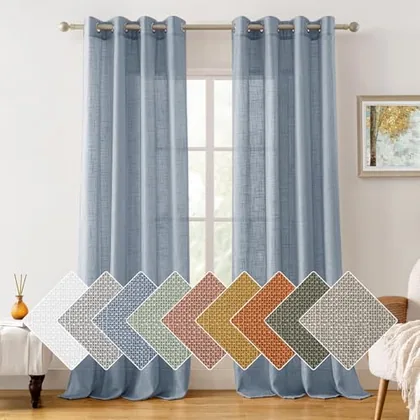
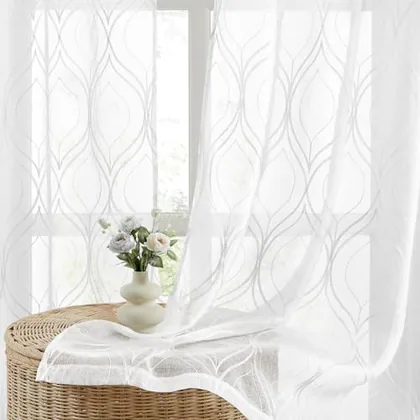
103 panels for daylight you want to keep and a view you would rather not share.
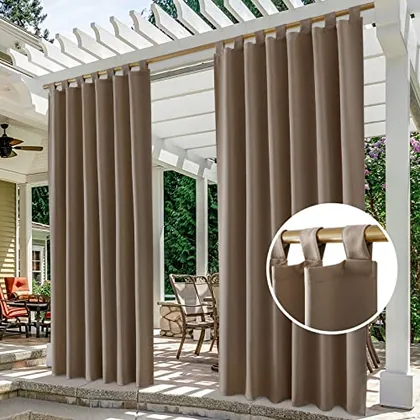
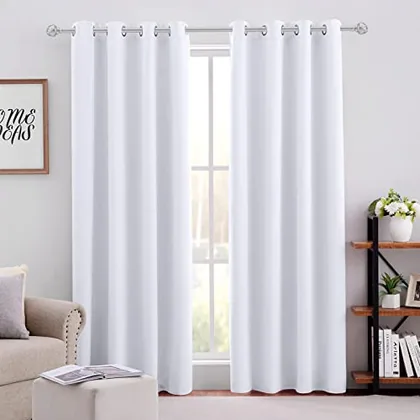
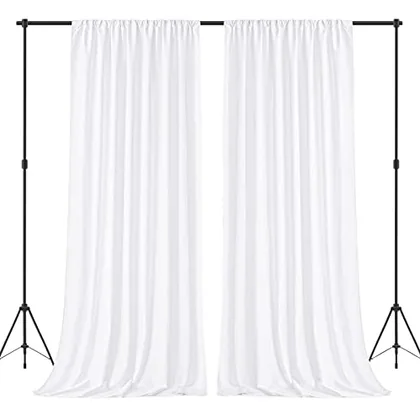
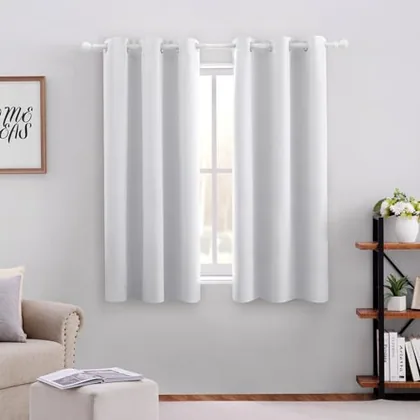
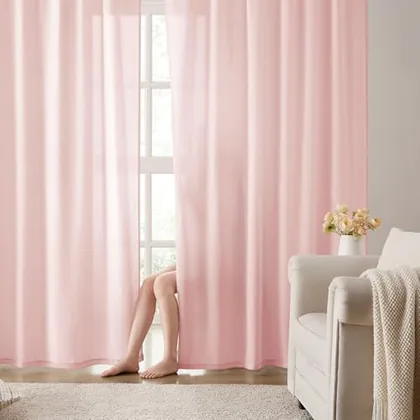

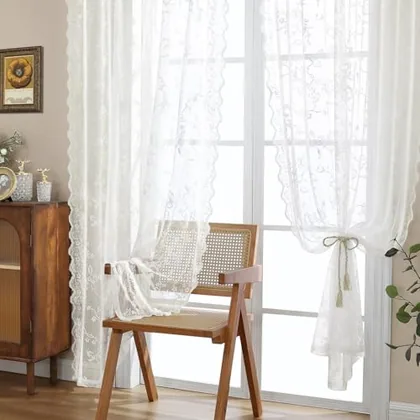
Compared
We make curtains, so we know that most windows do not need just one kind of covering. A blackout panel keeps the room dark at night. Sheers let daylight through during the day and keep people from seeing in. Blinds and shades handle light differently still, and they sit closer to the glass.
The table below compares how these options work across the things that matter when you are choosing: how much light gets through, what the fabric is made of, whether it cuts down on noise or holds in warmth, and how you wash it. The three columns below are our blackout panels, our sheers and the blinds most people weigh them against, set out so the trade-offs are visible in one glance.
Pick the column that fits your window and your routine. You might find that more than one of them belongs on the same rod.
| Our blackout panels | Our sheers | Blinds or shades | |
|---|---|---|---|
| Light at midday | Blocked, edge glow only | Softened, room stays bright | Blocked in slats, gaps at the edges |
| Privacy after dark | Full | Partial: shapes read through | Full when closed |
| Warmth in winter | Adds a still layer of air at the glass | Very little | Depends on the fit in the recess |
| Noise from the street | Softened by weight and weave | Little | Little |
| What it costs here | $14.69 and up | $5.42 and up | We do not sell them |
| Cleaning | Machine wash where the label says so | Machine wash, hang damp | Wipe slat by slat |
The range
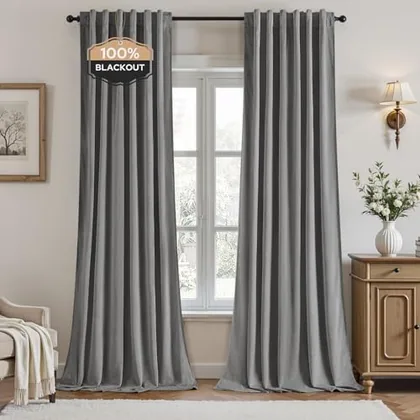
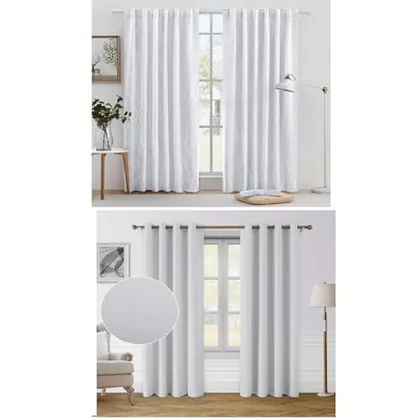
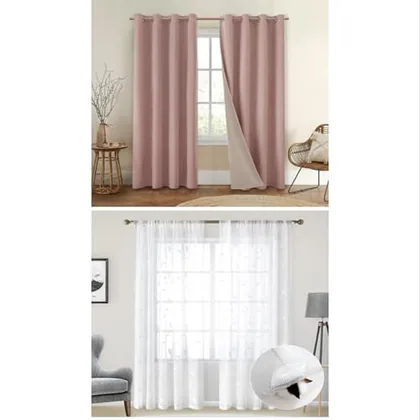
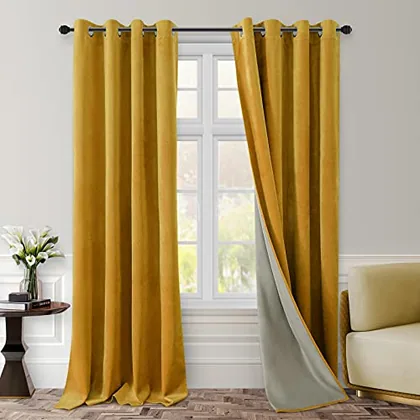
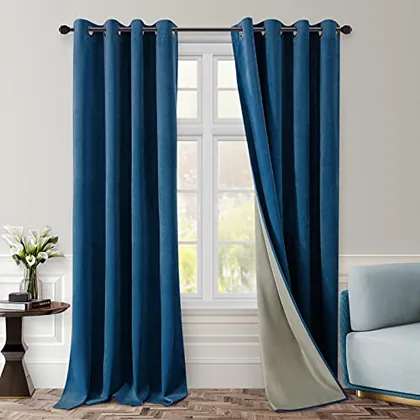
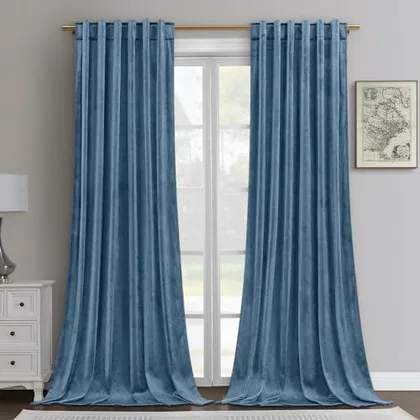
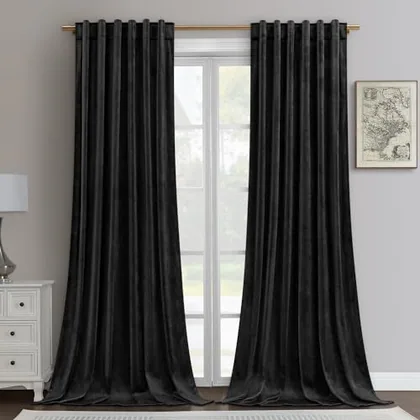
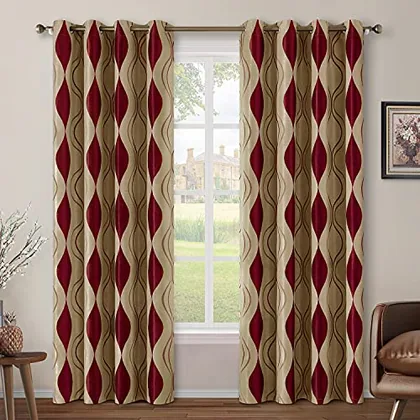
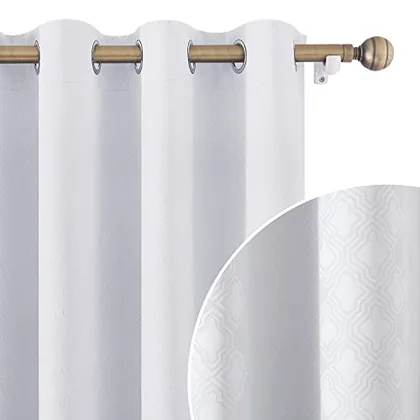
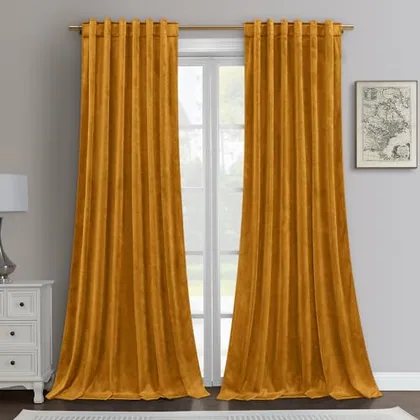
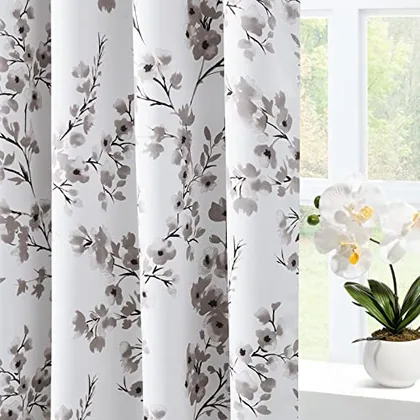
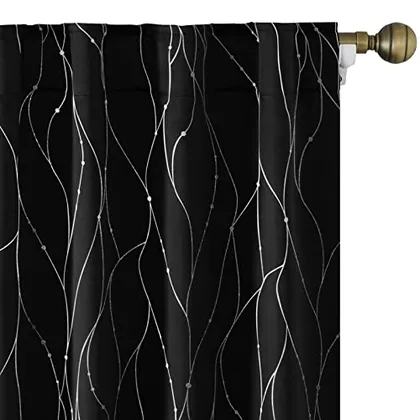
Where the fabric carries the room: 52 embroidered and patterned panels and 17 in velvet.
Before you measure
How to Measure Your Window for Curtains
Start with the rod, not the glass. This is the step most people skip, and it matters. Your curtain rod should extend past the window frame on each side by about four to six inches. That way the panels can pull back clear of the glass when you open them, and the fabric covers the frame instead of leaving a gap at the edge.
Now for the panel width. We design our curtains to gather softly when they hang, and that only works if you have enough fabric to fold into itself. Take your rod length and multiply it by one and a half to two times. A 60-inch rod needs 90 to 120 inches of combined panel width across however many panels you are hanging. Less than that, and the curtains will look stretched flat against the window. More than that is fine. You will just get deeper folds.
Here is what happens if you match the panel width exactly to your window or rod: the curtain hangs straight with almost no drape. It covers the space, but it will not have the full, gathered look that makes a window feel finished. Some people prefer that clean, flat appearance, and it works for certain rooms. Just know that you are choosing a different style when you size it that way.
Measure once before you order. It saves time later.
What Blackout Curtains Actually Do
When we say a fabric blocks light, we mean the cloth itself. Our triple-woven blackout panels do not have a coating on the back. We weave the light-blocking layer into the material, so the fabric stays soft and hangs in even folds. It does not stiffen up or crack after washing.
But no curtain panel can make a room completely dark on its own. Light finds the gaps. It comes around the sides, slips over the rod at the top, and sneaks under the hem at the bottom. That is just how windows work. The wider the gap between the edge of the panel and the wall, the more daylight gets through.
You close those gaps by how you hang them. Mount your rod four to six inches above the frame, and extend it eight to twelve inches past each side. Then the panel covers the wall around the window instead of stopping at the glass. Pull the fabric as close to the floor as you can without letting it brush against it.
We make the panels. How you hang them decides how dark the room gets.
How Your Curtains Hang
The heading at the top of a curtain panel decides how it moves. We offer four styles across our catalog, and each one behaves differently when you pull it open or push it closed.
Grommet panels have metal rings sewn into the fabric. They glide smoothly along a rod, which makes them the easiest choice if you draw your curtains twice a day. The rings create even, soft folds as the fabric stacks to one side.
Rod pocket is the simplest style: a stitched channel at the top that the rod slides through. These hang in casual, rounded waves. They do not slide as freely, so we recommend them for windows you adjust less often.
Back tab headings hide the rod behind a fabric flap. From the front, they look clean and tailored. The hidden loops let them move reasonably well, though not quite as easily as grommets.
Pleated curtains gather the fabric into structured folds at the top. This gives them a formal, dressed look. They take a little more effort to draw because the pleats hold their shape.
Pick the style that matches how you use the room. A bedroom that opens and closes every morning works best with grommets. A dining room might suit the fuller look of rod pocket or pleated instead.
The weight of a fabric decides how a panel hangs at your window. We think about this before we cut a single yard. A faux linen weave has enough body to hold a soft fold on its own. Velvet carries more heft, so it falls into deeper, closer stacks that catch the light differently as you walk past. Voile is lighter still, and it moves with the slightest breeze.
We list the material for most of our curtains because you cannot tell how something will drape from a photograph alone. Polyester microfiber and cotton behave unlike each other even when they share a similar look on screen. Our blackout panels use a triple-woven construction rather than a backing layer glued to the reverse side. That means the light-blocking yarn is part of the cloth itself, so the fabric stays pliable wash after wash instead of growing stiff.
Check the finished dimensions we publish for each panel. Width and drop matter as much as the weave. Two fabrics of equal weight will sit differently if one is cut wider or longer than the other. We measure every style so you know what arrives at your window.
Wash our panels cool. We mean it: low temperature, low spin. The fabric will thank you for the gentle cycle.
Here is what we never put in a dryer. Heat does things to fibers that you cannot undo. It can shrink a panel by inches along the drop, and it can bake a blackout lining until the layer goes stiff. Once that happens, the curtain stops falling the way we wove it to fall. You lose the soft drape that makes a window look right.
So hang your panels while they are still damp. This is not a trick. A wet curtain has weight, and that weight pulls the creases out on its own. Gravity does the work an iron would do, but without the heat that damages the weave.
We make most of our range machine washable because we know curtains collect dust and kitchen grease and bathroom moisture. They should be easy to clean. But easy does not mean careless. Cool water, gentle spin, air dry. Follow those three steps and the panel you bought is the panel you will still have years from now.
About HOMEIDEAS
The Window We Started With
We began with one window. It faced a streetlamp that came on at dusk and stayed on until dawn, and we could not find curtains that actually kept the light out. Not a little of it, or most of it, but all of it. So we started making our own.
That was how it began. One window, one problem, and a decision to solve it ourselves rather than settle for what was already out there.
How Blackout Actually Works
Most blackout curtains you will see use a coating glued to the back of the fabric. It blocks light well enough, but it makes the panel stiff. The material does not drape. It hangs flat against the wall like a board, and after a few washes the coating can start to crack and flake off.
We do it differently. Our blackout panels are triple-woven, which means the light-blocking layer is woven into the fabric itself as a third layer during production. There is no backing to peel away and no coating to crack. The result is a curtain that feels soft to the touch and falls into natural folds the way good fabric should, while still blocking the light that passes through the weave.
We say 100% blackout about the fabric itself, because that is what we can measure and stand behind. The panel blocks what passes through the textile. What slips around the edges, above the rod, or underneath the hem is a matter of how you hang it and how wide you make the panel relative to your window frame. We will not claim a pitch-black room, because we cannot control those gaps, and we would rather tell you the truth than sell you an exaggeration.
We check whether the bottom edge stays even or starts to stretch on one side.
This approach took time to get right. The first samples were too heavy. Then they were too light and let pinpricks of light through. We adjusted the weave, changed the yarn weight, and tested each version until it behaved the way we wanted it to behave.
Room by Room
Once we had the blackout range working, we noticed something obvious: people do not only need darkness for sleep. They need privacy during the day. They need something softer over kitchen windows. They need panels for doors that swing open and shut dozens of times a day. They need texture and color and patterns that feel right for the space where they live.
So we expanded. Not all at once, but as each new need became clear enough to us that we wanted to address it properly rather than rush something incomplete into production.
The order followed the way you actually move through a home. Curtains came first, naturally. That is still our largest department, with 132 blackout options and another 95 sheers and privacy panels alongside them. Then came the shorter pieces for kitchens and doorways, which have different demands. Kitchen tiers sit near stoves and sinks, so they need to wash well and hold up to splashes. Door panels take more wear from being brushed past constantly, so the fabric needs durability along with the look.
From there we moved outward. Bath rugs made sense because a bathroom is a small room where texture matters and so does function underfoot. Shower curtains followed. Then pillow covers, then bedding, then the smaller categories that fill in the gaps around the main pieces. Today we make across 11 departments and 562 products.
| Department | Products | From | Median |
|---|---|---|---|
| Bath Rugs & Mats | 64 | $13.49 | $25.48 |
| Shower Curtains | 27 | $13.99 | $19.99 |
| Pillow Covers | 36 | $11.99 | $16.99 |
| Bedding | 28 | $18.99 | $47.28 |
| Door Curtains | 61 | $5.48 | $14.59 |
| Kitchen Tiers & Valances | 42 | $4.87 | $14.39 |
| Velvet Curtains | 17 | $35.99 | $42.29 |
| Embroidered & Patterned | 52 | $9.48 | $24.25 |
| Blackout Curtains | 132 | $14.69 | $36.74 |
| Sheer & Privacy Curtains | 95 | $5.42 | $20.87 |
| Linen & Plain Curtains | 8 | $19.99 | $38.99 |
We did not plan that number in advance. It grew one fabric at a time.
How We Decide a Fabric Is Ready
Before any new textile makes it into the catalogue, it spends weeks hanging in a window here. We watch what morning light does to it. We check whether the bottom edge stays even or starts to stretch on one side. We wash it repeatedly to see how the draping changes, if the color shifts, and whether the seams hold up to real use.
Some fabrics look beautiful on a bolt and disappointing once they are cut and hung. Others surprise us by handling daily wear better than we expected. We keep the ones that perform and set aside the ones that do not, no matter how good they looked on paper.
The numbers in our catalogue reflect this testing process:
Not every product includes every specification. Some fabrics do not need a thermal claim because they were not designed for insulation. Others come in one standard size, so we state that clearly instead of offering confusing options. We include what helps you decide and leave out what does not.
What We Do Not Claim
You will notice some things missing from our site. There are no customer ratings here. No star averages, no review counts, no testimonials pulled from other places and republished. We have not collected reviews, and we will not invent them to fill empty space. If you want to know how a product holds up over time, the specifications and the materials tell you more than a fabricated five-star summary ever could.
We also do not make promises we cannot keep. No lifetime guarantees phrased in fine print that actually exclude everything worth claiming against. No "best on the market" language, because we cannot test every competitor's product and neither can you. No invented statistics about satisfaction rates or return percentages. Those numbers either come from somewhere we cannot verify or they never existed in the first place.
What we can tell you is straightforward. We design these textiles. We specify the fabrics, the sizes, the heading styles, and the care instructions. When we say a panel is machine washable, it is because we washed it ourselves, not because we assumed it would be fine. When we list a finished size in inches, it is the actual measurement of the product you will receive.
The rest is up to you: whether the color suits your walls, whether the length works for your windows, whether the feel of the fabric matches what you wanted when you started looking. We cannot choose for you, and we would not try.
The range
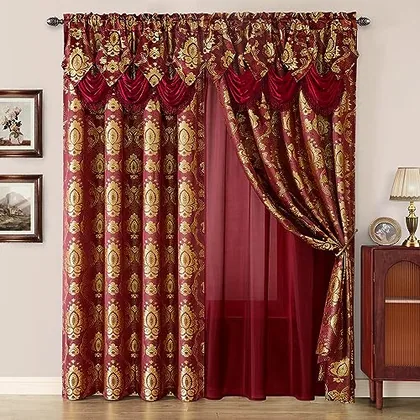
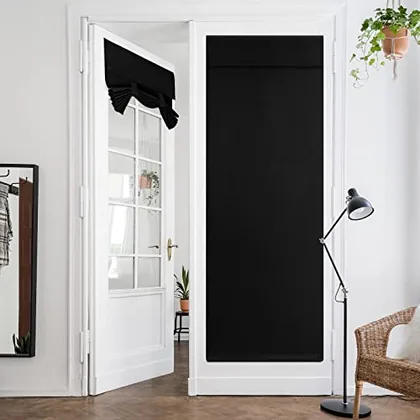
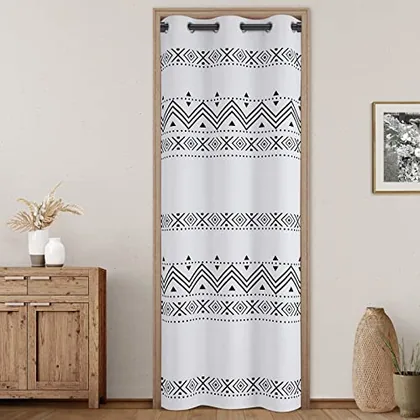
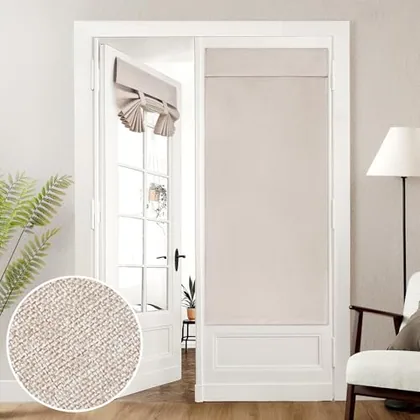
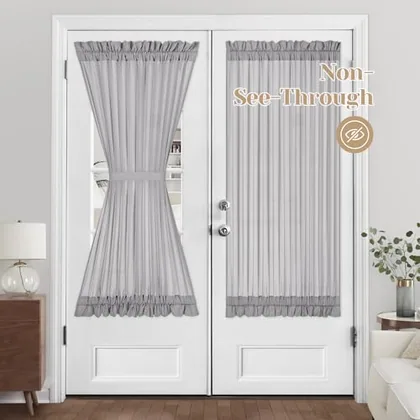
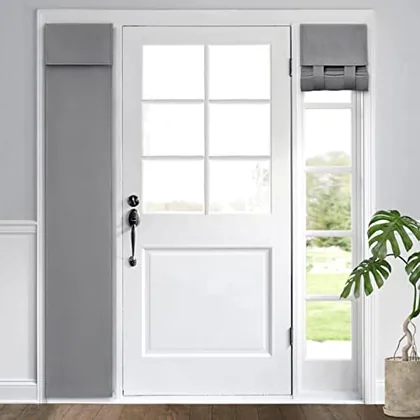
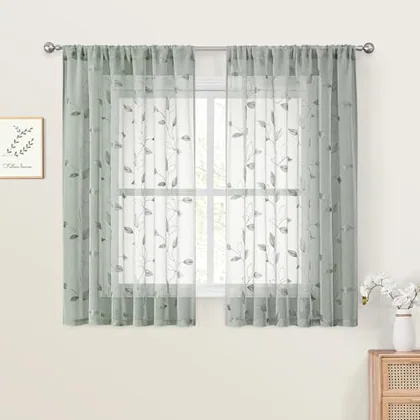
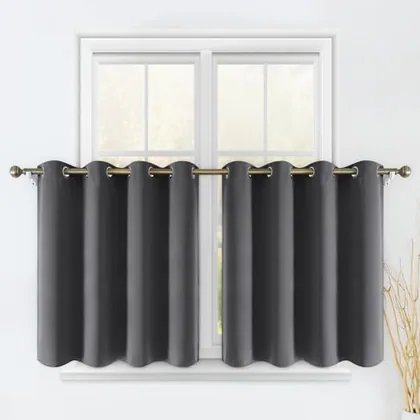
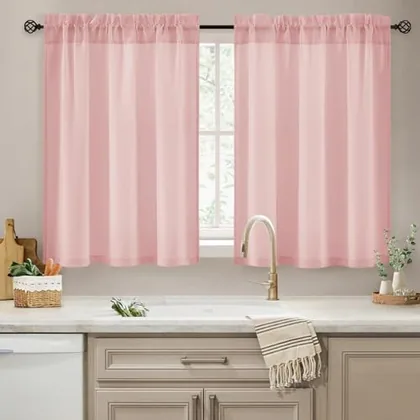
Tiers and valances for kitchens and bathrooms, plus 61 panels cut for French and glass doors.


How we make it
We started with one window. It faced a streetlamp. That first panel taught us what mattered, and we have been adding to the catalogue in the same order you would use to furnish a room: curtains first, then the shorter pieces for kitchens and doors, then the rugs, pillow covers, and bedding that sit nearby.
Our blackout panels get most of the questions, so we will start there. A lot of blackout curtains work by bonding a rubbery coating to the back of a decorative fabric. It blocks light well enough, but it makes the cloth stiff. The panel hangs flat against the wall instead of falling into soft folds, and the coating can peel or crack after a few washes.
We do it differently. We weave three layers into a single cloth. The face layer gives you the color and texture you see from the room. The middle layer stops the light. The back layer protects everything and helps the fabric drape. Because we knit them together on the loom rather than gluing anything on afterwards, the panel stays soft and moves like ordinary curtain fabric should.
Every new textile we consider spends weeks hanging at a window before we add it to the catalogue. We watch how morning light hits it. We check whether the bottom edge holds its shape. We wash it several times to see what that does to the drape and the hand feel. If a fabric does not pass those weeks, it does not become a product.
Across 11 departments now, we offer patterns, solids, velvets, linens, and sheers. Some filter light softly. Others block it completely. We make bath rugs, shower curtains, and pillow covers using the same approach: pick the right material, test it where it will actually live, and only then put it in the catalogue.
We are a small design and sourcing team. We work with our hands on the samples and our eyes on the windows. That is the whole method.
Where we started
We began with one window. It faced a streetlamp, and the light came through the curtains we had. That single window taught us what mattered: how a fabric hangs, whether it stays put, and what it does with the morning sun.
So we made our first blackout panels. We wove the light-blocking layer into the fabric itself, not glued onto the back. That way the cloth drapes softly and does not go stiff after washing. Those early curtains worked well enough that we kept going.
Next came the shorter things. Kitchen windows need different treatment than living room ones, and doors call for their own drops. We added tiers and valances, then door panels in lengths that fit the space above a frame without dragging on the floor. The same logic applied to sheers: sometimes you want privacy without losing daylight.
From there we moved outward across the room. Bath rugs made sense because feet step out of the shower onto something, and that something ought to feel good and dry quickly. Shower curtains followed the same path. Then pillow covers, because the fabric we liked for windows looked right against a couch cushion too. Bedding was the natural next step when we had learned enough about weight, weave, and how cotton behaves through washes.
Now we keep 11 departments of home textiles. Blackout curtains remain the largest part of what we make, but the range has grown to include velvet, embroidered linen, and plain weaves in colors like sage green, beige, cream, grey, and blush. We test each new fabric at a window for weeks before it goes into the catalogue. We watch how morning light hits it, check whether the hem holds its shape after laundering, and see how it folds when it hangs. If it does not behave the way we want, it does not become a product.
We still work from that first idea: start with the window, then fill in the room around it.
Quality
What Quality Means Here
When we list a curtain or rug, we tell you what we know about it. We do not guess at the rest. This page explains what those details mean and what we leave out on purpose.
Measurements and packs
We give finished panel sizes for 357 of our 562 products, stated as width by drop in inches. That is the size of the fabric once it is made and hemmed, not the size of the window it will cover. You will need to decide how much extra width and drop you want for the look you prefer. For 328 products we state how many panels come in the pack. When that number is not there, it means we have not confirmed it.
How they hang
Our headings are grommet, rod pocket, back tab, tab top, or pleated. We state which one each product uses. The heading affects how the fabric sits on the rod and how wide the panel spreads when you hang it. A rod pocket gathers more tightly than grommets do. We list this because it changes what rod diameter you need and what the final draped width will be.
Fabric and light
We name the fabric for 462 products: faux linen, linen blend, velvet, chenille, microfibre, cotton, or polyester. Each one drapes differently and feels different to the touch. Velvet holds deeper colour than microfibre does. Linen blend softens with washing in ways polyester does not.
For 405 products we state how much light passes through: 100% blackout, blackout, room darkening, light filtering, semi-sheer, or sheer. These terms describe the fabric itself. They do not account for light that enters around the edges, above the rod, or below the hem. No woven panel seals a room completely.
Washing
524 of our products state that they are machine washable. When a product does not say this, we do not know whether it can go in a washer. We will not tell you it can when we have not tested it.
What we do not claim
Some products note thermal behaviour (136) or noise reduction (109). Most do not. We do not invent these properties when the specification is silent. If a product does not mention insulation, we are not saying it insulates. We are saying we have no grounds to say so.
We publish no ratings here and no customer reviews. None have been collected. What you see in our catalogue comes from us, from our measurements and our descriptions. When we do not know something, we leave it blank rather than fill it with words that sound right but mean nothing we can stand behind.
Orders, payment, shipping and returns are handled by our retail partner at checkout.
The people behind it
We are a small team that designs and buys home textiles. There are 11 departments in the catalogue now, and more than five hundred products across them, but we started with a single window. One window, one streetlamp outside it, and the question of how to keep that light from coming through at night.
That is where our blackout curtains began. We make them with triple-woven construction. The light-blocking layer is woven into the fabric itself rather than glued to the back, so the panels drape softly instead of stiffening up over time. We tested that approach on our own windows first.
Every new fabric hangs at a window here for weeks before we add it to the range. We watch how it takes the morning light. We see whether the bottom edge holds its shape after a few days of gravity doing its work. We wash it, dry it, hang it back up, and check what the laundering does to the way it folds. If a textile does not behave well in ordinary use, it does not become a product we sell.
The assortment grew in the order that rooms tend to fill in. Curtains came first. Then shorter panels for kitchens and doorways. Then bath mats for the floor, pillow covers for the bed, and bedding after that. We added sheer curtains for privacy without darkness, embroidered patterns for people who want texture, and velvet for rooms that call for something heavier.
We list the facts you need to choose: finished panel dimensions, how many come in a pack, the heading style, how much light gets through, what the fabric is made from, and whether it goes in the washing machine. We do not publish ratings or reviews. We have not collected any.
What we can tell you is how each textile behaves when you live with it day after day. That is the information we use ourselves.
The range
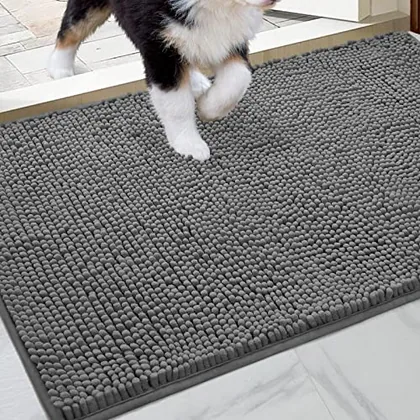
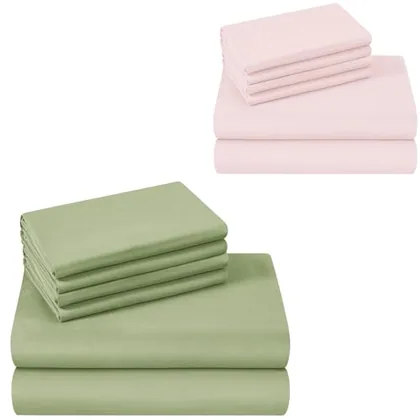
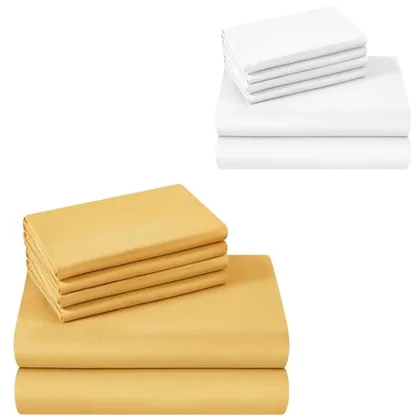
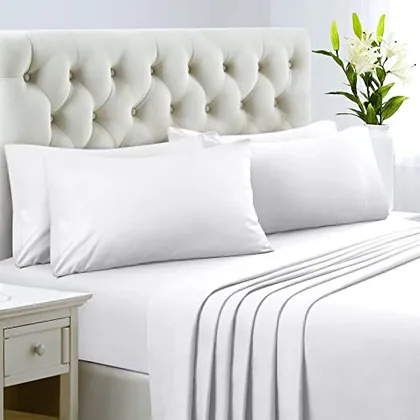
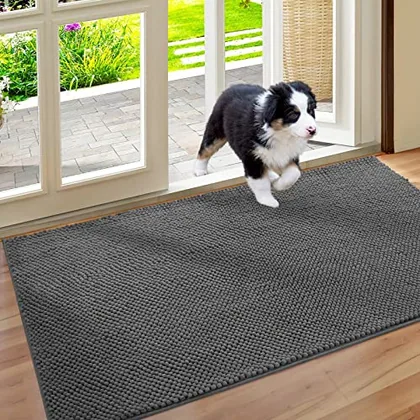
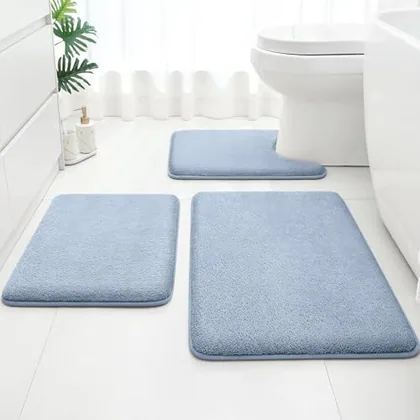
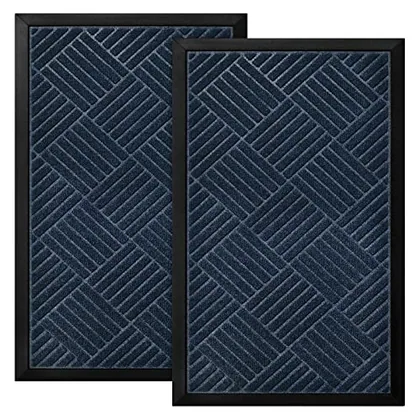
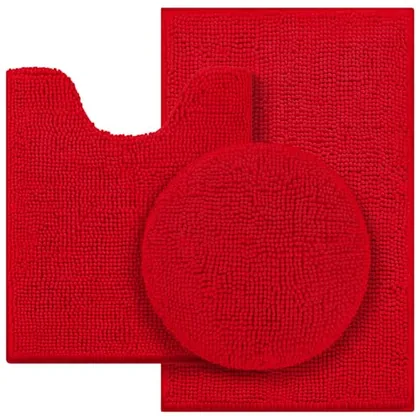
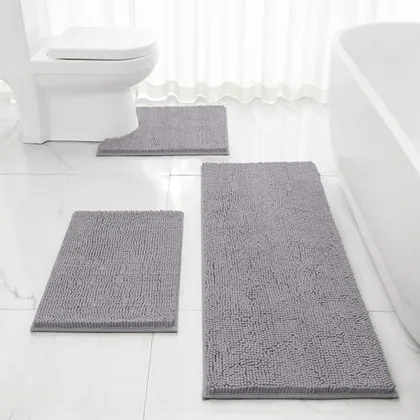
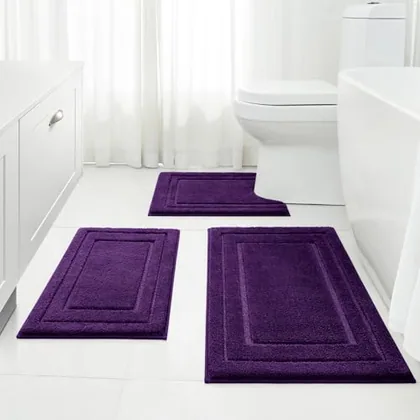
Bath rugs, shower curtains, pillow covers and bedding: the textiles that finish the rooms our curtains hang in.
What we can prove
| What it covers | Who sets it | What we can show |
|---|---|---|
| Light and sleep | NINDS, public health guidance | We quote it in the blackout guide, with the date we read it |
| Damp, dust and washing | EPA indoor air guidance | Quoted in the care guide, word for word |
| Fabric performance | Our own specification | Panel size, heading, weave and stated opacity for that product |
No certificate hangs on our wall, and we will not imply one. We have no lab affiliation, no third-party seal, and no compliance mark to display here. If you came looking for one, this is where we say that plainly.
What we publish instead is what we can measure ourselves. Across 562 products, 405 state how much light the fabric blocks, from sheer to 100% blackout. We list finished panel sizes in inches for 357 of them. We name the fabric, the heading style, whether it is machine washable, and what colour you will receive. These are dimensions, materials, and observable properties. A curtain either blocks light or it does not. It measures forty inches wide or it does not.
What our specifications do not cover is what happens in your room after you hang the panel. We cannot certify that a blackout curtain will make your bedroom dark at noon. Light comes around the edges, above the rod, and underneath the hem. The fabric itself is what we stand behind. The darkness of your space depends on how you install it, and we do not control that.
Where health or dampness enters the conversation, we stop guessing. We quote public guidance word for word, with the date we last read it. For light exposure and sleep quality, we refer to the National Institute of Neurological Disorders and Stroke. For indoor air quality and mould prevention in bathrooms, we refer to the Environmental Protection Agency. We do not rephrase their language or summarize their findings. You can read what they wrote, and you should.
We design textiles. We write down what they are. That is what this catalogue contains.
Gallery
We make curtains and the textiles that sit around them. Before any fabric goes into our catalogue, it hangs in a window for weeks. We watch how it takes morning light, whether the hem holds its shape, and what a wash cycle does to the drape. These photographs show that process in other people's rooms. You will see how our triple-woven blackout panels fall, how sheer linen moves when a breeze comes through, and where a bath rug lands on a tile floor. The numbers on a card tell you dimensions and materials. The pictures here show you what those details actually look like once someone has hung them up.
Guides
Asked and answered
No. We design and weave the fabric and publish what each panel measures; the order itself is placed, paid and delivered by our retail partner, and returns go back the same way.
We have not gathered any, so there is nothing honest to print. A borrowed average or an invented one would tell you less than the measurements already on the card.
Ours move when the update runs, and the date of that run sits on a single page rather than under every panel. If a price has gone stale the product leaves the range until it comes back.
It means the fabric itself passes no light. Light still comes around the panel: at the sides, over the rod and under the hem. Hanging the rod wide and high is what closes those gaps, and we say so in the blackout guide rather than promising a dark room on a card.
Measure the rod, not the glass, and allow one and a half to two times that width in fabric so the panels still gather when closed. Every card states the finished width of a single panel and how many panels come in the pack.
Where a product states machine washable, that is what its specification says. Wash cool, skip the dryer and hang the panel damp so the creases fall out under its own weight.
